
Digital Watch Observatory - Digital Governance in 50+ issues, 500+ actors, 5+ processes
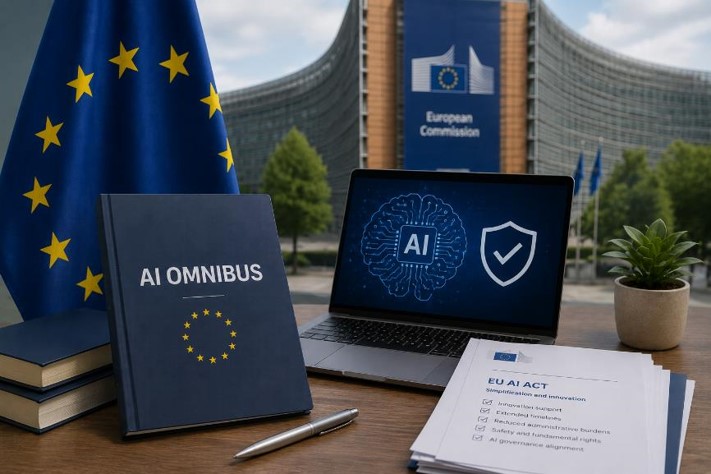
New legislation enables the EU to reduce compliance burdens for AI developers and businesses.

Thirty US organisations will share nearly $2 million through Meta AI glasses grants supporting practical community projects.

More than 800 experts discussed AI cyber defence, information sharing and the future of secure military operations.

A new AI security platform from Microsoft aims to improve cyber resilience through automated risk analysis and coordinated defensive actions.

The Commission's Cyber Resilience Act guidance helps manufacturers and developers prepare for mandatory cybersecurity requirements.

New initiatives position South Korea as a key player in the global AI supply chain.







Must read
Analysis
AI governance is becoming infrastructure governance
AI governance is increasingly expanding beyond the regulation of algorithms to encompass the physical and institutional infrastructure, such as chips, data centres, cloud computing, energy, and connectivity, that determines who can develop, deploy, and benefit from AI.
Analysis
Digital Omnibus on AI: The EU's AI Act simplification and new AI Office powers
The Council of the EU has approved the Digital Omnibus on AI, legislation that simplifies the AI Act and expands the AI Office's oversight of platforms regulated under the DSA.
Analysis
Claude Fable 5, frontier AI models and the future of cybersecurity
Digital resilience becomes increasingly important following Claude Fable 5 and its security implications.

DW at a glance
FOLLOW
WSIS+20 Process
The year 2025 marks 20 years since the finalisation of the World Summit on the Information Society (WSIS), and a review process looking at 20 years of WSIS outcomes implementation will conclude with a high-level meeting at the UN General Assembly (UNGA), in December. This page keeps track of the process leading to the UNGA meeting in December 2025. It also provides background information about WSIS and related activities and processes since 1998.

Explore the Observatory
Digital Technologies
From internet applications to quantum computing, we focus on advanced and emerging digital technologies which are increasingly reshaping our economies and societies.
Clusters of Policy topics
We unpack digital policy by exploring over 50 topics – from access and sustainable development to network security and the future of work – classified in 7 clusters.
Processes
Follow some of the most important digital policy processes, from the EU's work on the Digital Services Act/Digital Markets Act to the UN Cybercrime Ad Hoc Committee.